



Cooling Blanket vs Normal Blanket: What Actually Keeps You Comfortable All Night?
Choosing the right blanket sounds simple until you actually try to sleep through a warm, humid night.
You may start the night feeling comfortable, but a few hours later, the blanket feels too warm, your body feels sticky, and you start kicking it away. Then the air-conditioning feels too cold, so you pull it back again. This back-and-forth is one of the most common sleep problems in Singapore homes.
The real issue is not always your air-con temperature, your fan speed, or even your mattress.
Sometimes, the problem is your blanket.
Many normal blankets and traditional comforters are made to feel thick, warm, and cozy. That can be comforting in colder climates, but in Singapore’s humid weather, it can quickly become too heavy, too stuffy, and too warm.
This is why more hot sleepers are now looking for cooling blankets and cooling comforters. But the question is: what actually keeps you comfortable all night?
Let’s compare cooling blankets vs normal blankets — and why KoriFuton Arc-Chill Cooling Comforter may be the better choice if you want cooler, lighter, more breathable sleep.
What Is a Normal Blanket?
A normal blanket is usually designed to provide warmth and coverage.
Depending on the material, it may be made from cotton, polyester, fleece, microfiber, or thicker quilted fabrics. These blankets can be useful in cool rooms, but they often focus more on warmth than breathability.
The problem is that many normal blankets trap body heat. Once your body warms up under the blanket, the heat stays close to your skin. This can make you feel sweaty, sticky, and restless during the night.
For hot sleepers, a normal blanket can feel comfortable for the first 10 minutes, but uncomfortable after a few hours.
Common problems with normal blankets include:
-
Heat trapped around the body
-
Heavy or stuffy feeling
-
Sweaty sleep
-
Slow drying after washing
-
Too warm for humid nights
-
Not ideal for people who overheat easily
This does not mean normal blankets are bad. They simply may not be the best choice for warm climates or hot sleepers.

What Is a Cooling Blanket?
A cooling blanket is designed to feel fresher, lighter, and more breathable than a normal blanket.
Instead of focusing mainly on warmth, a good cooling blanket helps reduce the stuffy feeling that comes from trapped heat. It should feel smooth, breathable, and comfortable against the skin.
However, not all cooling blankets are the same.
Some are very thin and may feel too light, especially in air-conditioned rooms. Some feel cool at first but do not provide enough soft coverage. Others may look cooling but still feel heavy after a few hours.
That is where a cooling comforter like KoriFuton becomes different.
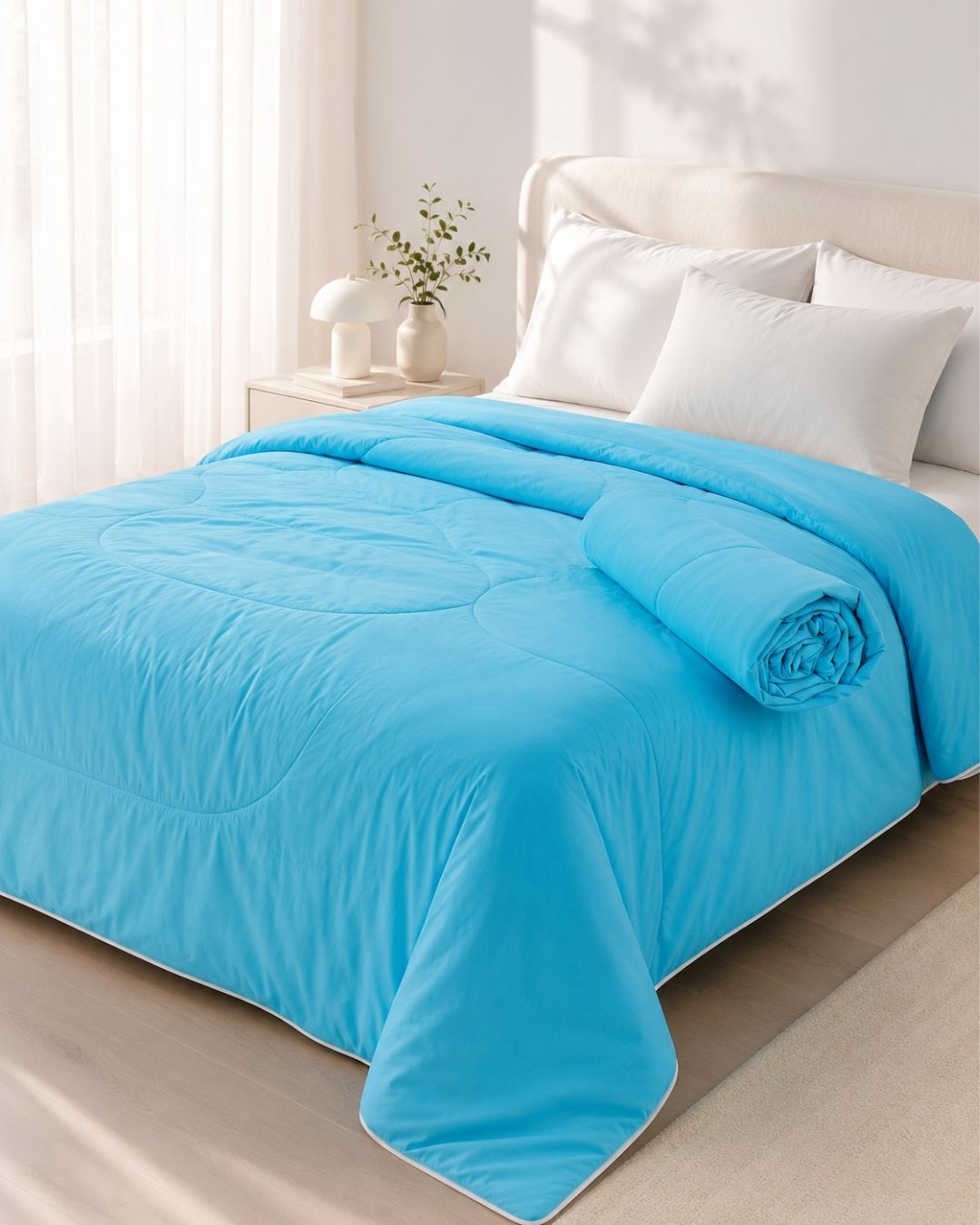
KoriFuton is not just a thin cooling blanket. It sits between a cooling blanket and a traditional comforter. It gives more soft coverage than a thin blanket, but it is lighter and less bulky than a thick quilt or duvet.
This makes it ideal for customers who want cooling comfort without feeling uncovered.
Cooling Blanket vs Normal Blanket: The Biggest Difference
The biggest difference is how each one handles heat.
A normal blanket often keeps warmth close to the body. That can be useful in cold weather, but uncomfortable in humid climates.
A cooling blanket or cooling comforter is designed to help your body feel fresher by reducing the heavy, trapped feeling of traditional bedding.
KoriFuton uses Arc-Chill cooling fabric technology to create a cool-to-touch surface. Its smooth outer fabric is made from 90% Nylon and 10% Spandex, giving it a soft, flexible, breathable feel. Inside, the 100gsm lightweight padding adds gentle comfort without creating heavy bulk.
That means you still feel covered, but not trapped.
For hot sleepers, this difference matters a lot.


Why Normal Blankets Can Feel Too Hot at Night
Your body naturally releases heat during sleep. If your blanket does not allow that heat to escape comfortably, warmth builds up under the fabric.
This is when you start feeling hot, sticky, and uncomfortable.
In Singapore, the humidity makes this worse. Even if the room temperature is not extremely high, the air can still feel warm and damp. A heavy blanket can make your sleep space feel even more closed-in.
This is why many people use stronger air-conditioning just to feel comfortable under a thick comforter.
But that creates another problem. The room becomes cold, while the blanket still feels stuffy. You may end up feeling both warm under the blanket and cold outside it.
A better solution is to use bedding that feels more balanced.
How KoriFuton Keeps You Comfortable
KoriFuton was designed for real sleep conditions: warm nights, humid weather, air-conditioned rooms, and people who dislike heavy bedding.
The Arc-Chill cooling fabric gives an instant fresh touch when it meets the skin. It helps your sleep surface feel cooler when your body feels warm.
The lightweight 100gsm padding gives soft comfort without making the comforter bulky. This is important because many customers do not want to sleep under only a thin sheet. They still want the comforting feeling of being covered.
KoriFuton gives that balance.
Cool when the night feels warm.
Light when heavy bedding feels too much.
Comfortable when you just want better sleep.

Cooling, But Not Freezing
One concern customers often have is whether a cooling comforter will feel too cold.
KoriFuton is not designed to feel icy or freezing. It is designed to feel cool-to-touch, breathable, and balanced.
This makes it more practical for everyday use.
During warm periods, it helps reduce the stuffy feeling from trapped heat. In air-conditioned rooms, the lightweight fill still gives gentle coverage so you do not feel completely uncovered.
That is what makes KoriFuton different from very thin cooling blankets. It gives you cooling comfort, but still feels like proper bedding.

Why KoriFuton Is Better for Singapore Homes
Singapore sleep needs are different from colder countries.
Most homes deal with warm nights, humid rooms, fan-only sleeping, or air-conditioned bedrooms. A blanket that works well overseas may feel too hot here.
KoriFuton is designed with humid climates in mind.
It is suitable for:
-
Hot sleepers
-
People who wake up sweaty
-
Air-conditioned rooms
-
Fan-only rooms
-
Families
-
Children or sensitive sleepers who prefer lighter bedding
-
People who dislike heavy comforters
-
Guest rooms
-
Everyday all-season use
-
Customers who want soft coverage without bulk
It is also easier to handle compared with bulky comforters. Because it uses lightweight 100gsm padding, it is easier to lift, fold, wash, air dry, and store.
That matters for daily home use.

Why KoriFuton Is Worth the Price
A blanket is not just something you buy once and forget.
It affects your sleep every night.
If your bedding makes you feel hot, heavy, or uncomfortable, that discomfort becomes part of your daily routine. Cheaper blankets may look fine at first, but many customers eventually deal with poor breathability, trapped heat, rough texture, slow drying, or bedding that simply feels too warm for local weather.
KoriFuton is worth the price because it is designed to solve those everyday problems.
You are paying for:
-
Arc-Chill cooling fabric technology
-
Smooth 90% Nylon and 10% Spandex outer fabric
-
100gsm lightweight padding
-
Cool-to-touch surface comfort
-
Breathable feel for humid nights
-
Soft coverage for air-conditioned rooms
-
Lightweight handling and easier care
-
OEKO-TEX®, CertiPUR-US®, and GRS-certified materials
-
A cleaner, calmer bedroom look
-
A comforter designed for Singapore’s real sleeping conditions
This is not just a normal blanket with a nicer name.
KoriFuton is a lighter, cooler, easier everyday comforter made for people who want better sleep without heavy, stuffy bedding.

Should You Choose a Cooling Blanket or Normal Blanket?
Choose a normal blanket if you like warmth, weight, and thicker bedding. It may suit you if you sleep in a very cold room or prefer a heavy, wrapped-up feeling.
Choose a cooling blanket or cooling comforter if you often feel hot, sweaty, sticky, or uncomfortable under normal bedding.
Choose KoriFuton if you want the best balance: cooler than a normal blanket, more comforting than a thin sheet, lighter than a traditional comforter, and practical enough for daily use.
It is especially suitable if you want one comforter that works across humid nights and air-con rooms.

How to Use KoriFuton for the Best Cooling Feel
For the strongest cool-to-touch feeling, use KoriFuton directly against the skin.
You may also use it with a thin breathable duvet cover if you prefer extra protection. However, a thick duvet cover may reduce the direct cooling sensation because the Arc-Chill fabric will not touch your skin as closely.
For best results:
Use it directly for maximum cooling feel.
Use a thin breathable cover for easier care.
Pair with fan or air-conditioning during very hot nights.
Wash gently and air dry fully before storing.
This helps maintain the softness, freshness, and comfort of the fabric over time.

Final Thoughts
So, cooling blanket vs normal blanket — what actually keeps you comfortable all night?
The answer depends on how you sleep.
If you love warmth and weight, a normal blanket may be enough. But if you often wake up hot, sweaty, sticky, or restless, your bedding may be trapping too much heat.
KoriFuton Arc-Chill Cooling Comforter was created for that exact problem.
It gives you the comfortable coverage of a comforter, the lighter feel of breathable bedding, and the cool-to-touch freshness hot sleepers look for.
It does not feel icy.
It does not feel heavy.
It does not leave you feeling uncovered.
It simply helps your sleep feel cooler, lighter, and easier to settle into.
For Singapore homes, humid nights, air-con rooms, and hot sleepers, KoriFuton is not just a blanket upgrade.
It is a better way to sleep.
Cooler nights begin with lighter, smarter comfort — bring home KoriFuton and sleep without the heavy, stuffy feeling.



Leave a comment
All comments are moderated before being published.
This site is protected by hCaptcha and the hCaptcha Privacy Policy and Terms of Service apply.